

Signs of Taking Too Much Kratom: Symptoms, Management, and Safety Checklist (2026)
What if the sudden nausea, cold sweats, or disorienting eye flutter you're feeling isn't a permanent crisis, but a clear sign that you crossed an alkaloid saturation threshold? Recognizing the physical and cognitive signs of taking too much kratom is essential when your body suddenly feels overwhelmed. If you're currently experiencing dizziness or the rapid visual tremors known as the wobbles, your immediate concern is completely justified. You need to know whether your reaction is benign, and you need to know what to do right now.
Botanical safety doesn't rely on fear; it relies on understanding biological limits and product integrity. In this guide, you'll learn how to quickly assess symptom severity, apply immediate relief protocols to ease mental and physical distress, and discern standard overconsumption from a medical emergency. We also examine how alkaloid concentrations shift between powders and standardized extracts, giving you the verifiable knowledge needed to maintain control and ensure safe, consistent botanical experiences.
Key Takeaways
- Identify the immediate physical signs of taking too much kratom, including acute gastrointestinal distress and involuntary eye tremors, within minutes of onset.
- Understand how alkaloid saturation impacts the central nervous system and why receptor ceiling limits dictate your physiological response.
- Distinguish temporary vestibular episodes like the wobbles from severe clinical toxicity to quickly evaluate whether emergency care is necessary.
- Apply immediate, step-by-step recovery protocols focusing on targeted fluid replenishment and sensory mitigation to accelerate comfort.
- Eliminate dosage variance by transitioning from uncalibrated raw powders to standardized, lab-verified botanical formats backed by rigorous Certificates of Analysis.
Immediate Signs of Taking Too Much Kratom: The Physical Symptom Checklist
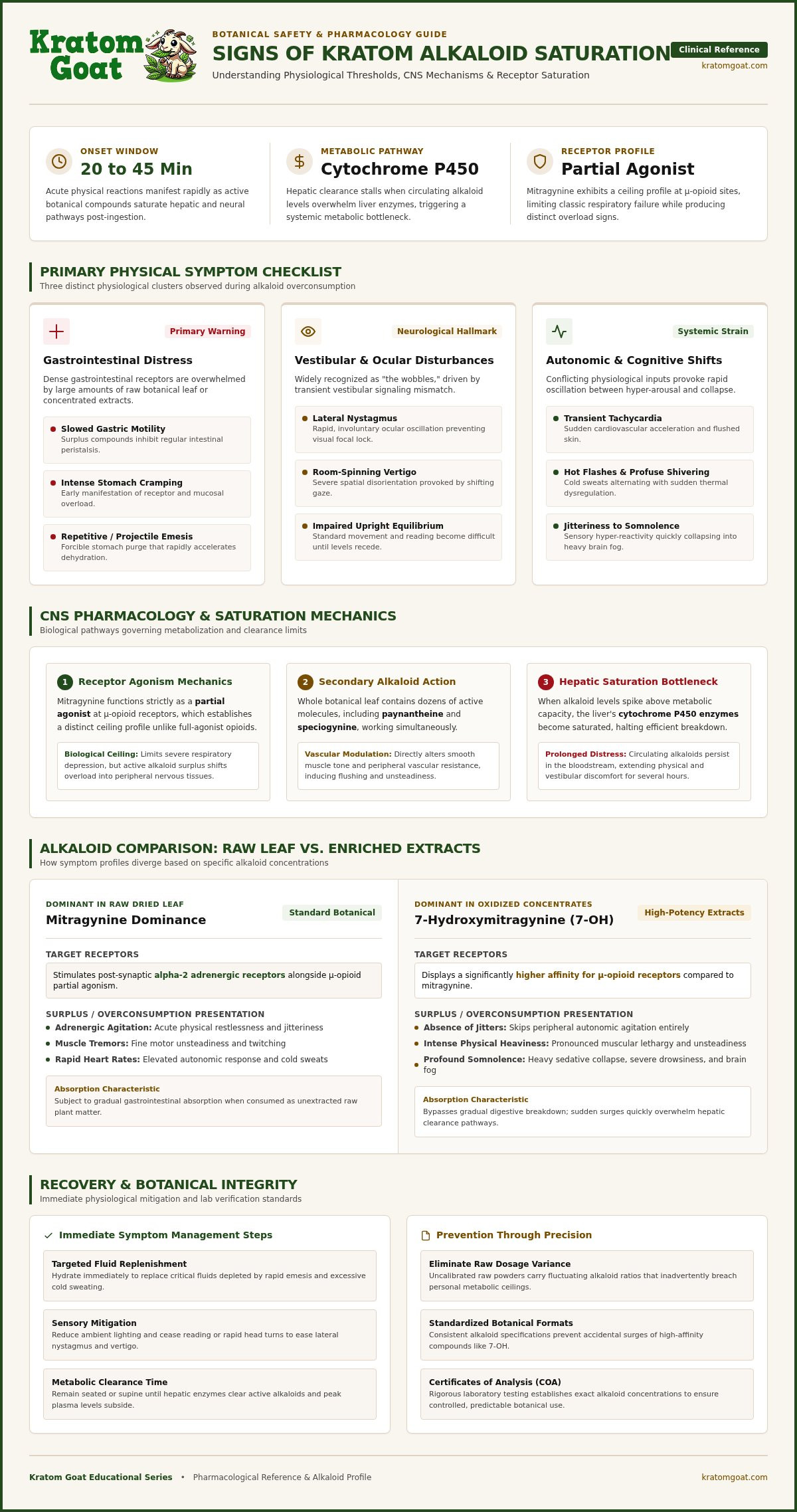
Timing is predictable. Acute physical reactions typically manifest within 20 to 45 minutes after ingestion as active compounds saturate hepatic and neural pathways. Recognizing the unmistakable signs of taking too much kratom allows you to intervene before physical distress peaks. Excessive intake quickly overwhelms peripheral receptors, triggering cold sweats, flushed skin, unsteadiness, and noticeable physical lethargy. Understanding foundational Mitragyna speciosa pharmacology clarifies why this happens: the human body maintains an absolute biological threshold for metabolizing concentrated botanical alkaloids.
Gastrointestinal Distress and Nausea
Intense stomach cramping usually serves as the primary warning sign of alkaloid saturation. The gastrointestinal tract contains dense concentrations of specialized receptors; when inundated by high volumes of raw plant matter or concentrated extracts, gastric motility slows dramatically. Sudden, persistent nausea follows. Projectile or repetitive emesis occurs as the stomach forcefully purges surplus botanical compounds. This rapid expulsion depletes vital fluids, accelerating dehydration and compounding bodily weakness.
Vestibular and Ocular Distortions ("The Wobbles")
The hallmark neurological indicator of excessive consumption is a disorienting vestibular disturbance known throughout the botanical community as "the wobbles."
Nystagmus is an involuntary, rapid ocular oscillation that prevents the eyes from maintaining a steady focal point. When lateral nystagmus takes hold, attempting to shift your gaze triggers blurred vision and room-spinning vertigo. This sensory mismatch disrupts equilibrium, making upright balance, reading, or standard physical movement exceptionally challenging until peak plasma levels recede.
Autonomic and Cognitive Fluctuations
Autonomic strain reveals itself through sudden physiological shifts. You may experience transient tachycardia alongside alternating hot flashes and profuse shivering. The central nervous system struggles under conflicting physiological inputs: initial jitteriness and sensory hyper-reactivity can suddenly collapse into heavy somnolence and brain fog. Identifying these cognitive and autonomic signs of taking too much kratom enables swift, rational symptom management rather than panic.
How Excessive Kratom Alkaloids Affect the Central Nervous System
Every physiological response traces back to cellular binding mechanics. Mitragynine operates as a partial agonist at $\mu$-opioid receptors, which establishes a distinct ceiling profile compared to full-agonist compounds. But raw leaf and concentrated botanical formulations contain dozens of active molecules. Secondary alkaloids such as paynantheine and speciogynine directly modulate smooth muscle tone and peripheral vascular resistance. When circulating alkaloid levels spike beyond individual tolerance, the liver's cytochrome P450 enzymes become heavily saturated, delaying metabolic breakdown and triggering acute systemic desensitization.
The Pharmacology of Alkaloid Saturation
Partial agonism inherently limits the risk of severe respiratory depression typical of classic opioids, yet excessive intake rapidly overwhelms peripheral neural pathways. As hepatic clearance stalls, active alkaloids accumulate in the bloodstream, transforming initial mild effects into sustained bodily distress. This metabolic bottleneck explains why severe signs of taking too much kratom can persist for hours. Sudden surges from high-potency extracts completely bypass the gradual absorption rates of standard leaf, a distinction emphasized in official FDA guidance on kratom safety regarding uncalibrated alkaloid concentrations.
Differences Between Mitragynine and 7-Hydroxymitragynine Impact
Understanding symptom presentation requires distinguishing between raw botanical leaf and enriched extracts. Mitragynine dominates raw dried leaf, stimulating post-synaptic alpha-2 adrenergic receptors. When taken in excess, this adrenergic activity drives muscle tremors, acute agitation, and rapid heart rates. In contrast, oxidized concentrates high in 7-hydroxymitragynine present an entirely different physiological profile.
Because it displays a significantly higher affinity for $\mu$-opioid receptors, surplus 7-OH skips autonomic jitters and causes intense physical heaviness, profound somnolence, and pronounced lethargy. You can learn how alkaloids differ by reading our guide to 7-hydroxymitragynine. Selecting precision-crafted formulations verified through Kratom Goat helps prevent these erratic alkaloid spikes by ensuring consistent, transparent potency in every batch.
Mitragynine Wobbles vs. Severe Adverse Reactions: Comparing Symptom Severities
Panic often magnifies discomfort. When alkaloid saturation strikes, distinguishing between manageable, self-limiting saturation and a true medical crisis is critical. The overwhelming majority of adverse consumer episodes represent temporary physiological saturation rather than fatal poisoning. In fact, clinical reviews of poison center records show that 79% of kratom-associated fatalities involve co-ingestion with prescription sedatives, synthetic opioids, or alcohol. When evaluating your condition, pinpointing the exact signs of taking too much kratom helps you determine whether your body simply requires quiet rest or immediate emergency intervention.
Common, Self-Limiting Side Effects
Standard overconsumption manifests primarily as uncomfortable sensory and gastrointestinal overload. While the involuntary ocular tremors and balance disruptions of the wobbles feel intense, they remain strictly localized to the vestibular system without compromising your airway. Symptoms generally peak within two hours and steadily decline as metabolic enzymes process circulating compounds.
- Vestibular Instability: Marked lightheadedness, room-spinning sensation, and rapid eye twitching that resolve without causing permanent neurological damage.
- Gastrointestinal Upset: Nausea, stomach cramping, or mild emesis that fades as gastric volume stabilizes.
- Peripheral Tremors: Fine motor shakiness in the fingers and hands that dissipates within two to four hours.
Critical Red Flags Requiring Immediate Emergency Care
Isolated whole-leaf overconsumption rarely suppresses respiratory drive due to mitragynine's partial agonist profile. However, severe complications demand immediate emergency intervention, especially if unverified extracts or multiple substances were consumed. You must treat distinct systemic failures as urgent medical crises rather than standard signs of taking too much kratom.
Activate emergency medical services (call 911) immediately if you or someone else displays any of the following critical indicators:
- Respiratory Depression: Abnormally slow, shallow, or irregular breathing, or extended pauses between breaths.
- Severe Central Nervous System Depression: Inability to stay awake, profound confusion, slurred speech, or total unresponsiveness to verbal and physical stimuli.
- Convulsive Episodes: Involuntary muscle spasms, rigid posturing, or full grand mal seizures.
- Cardiovascular Strain: Crushing chest tightness, irregular heart rhythms, or cyanosis (blue or gray discoloration around the lips, nail beds, and skin).
What to Do If You Experience Signs of Overconsumption
Action beats anxiety. The moment you detect unmistakable signs of taking too much kratom, cease all botanical consumption immediately. Don't take a secondary serving under the mistaken assumption that you consumed a weak batch. Alkaloid absorption takes time, and stacking doses turns mild physical discomfort into prolonged vestibular distress. Sit down, stabilize your environment, and let your body's natural metabolic pathways process the circulating compounds.
Step-by-Step At-Home Recovery Protocol
Managing the physical signs of taking too much kratom comes down to biological patience and deliberate physiological support. Follow these four targeted steps to minimize sensory overload and speed up your recovery:
- Stabilize Your Position: Sit or recline with your head semi-elevated in a cool, quiet room. Lying flat can worsen nausea, while sudden standing triggers balance loss from acute vertigo.
- Replenish Electrolytes: Sip chilled electrolyte water slowly rather than gulping plain tap water. Gastric irritation and sweating strip essential sodium and potassium; balanced electrolytes restore cellular hydration without triggering the emetic reflex.
- Eliminate Visual Stimulation: Close your eyes or dim the lights. Reducing ambient light and eliminating rapid ocular tracking directly calms the vestibular disturbance behind the wobbles.
- Regulate Respiration: Practice deep, diaphragmatic breathing. Inhale slowly through your nose for four seconds, hold for four seconds, and exhale for six seconds to counter autonomic adrenaline surges. Once your stomach settles, eat a small, bland carbohydrate snack like dry toast or crackers to buffer residual gastric acid.
What to Avoid During Acute Symptom Distress
Compounding your physiological burden makes symptoms worse. Never consume caffeine, energy shots, or nicotine while symptomatic, as these compounds amplify adrenergic stimulation and accelerate heart rate. Avoid alcohol, sleep aids, or over-the-counter antihistamines like diphenhydramine. Kratom alkaloids heavily inhibit hepatic CYP2D6 and CYP3A4 enzymes, meaning secondary sedatives can linger in your system at dangerously elevated concentrations. Finally, never attempt to drive or operate machinery until full balance and mental clarity return.
Long-term peace of mind requires consistent, predictable botanicals. To eliminate dosing guesswork and secure strictly verified alkaloid profiles, explore lab-tested tablets and extracts at Kratom Goat.
Prevention Through Precision: Lab Testing and Measured Botanical Sourcing
Precision prevents distress. The vast majority of unpleasant consumer experiences trace back to volumetric measurement errors rather than natural botanical properties. Eyeballing raw powder with kitchen spoons introduces extreme serving variability; settling densities, grind textures, and moisture levels cause standard scoops to fluctuate wildly in actual mass. Scooping uncalibrated powder creates volatile alkaloid exposure, making it easy to encounter the physical signs of taking too much kratom completely by accident.
The Role of Third-Party Testing in Preventing Adverse Reactions
Unverified botanicals introduce severe safety liabilities. Leaf material sourced without rigorous oversight may harbor heavy metals, biological pathogens like salmonella, or hidden synthetic adulterants designed to simulate higher potency. Adulterated formulations or unlisted alkaloid spikes easily trigger vestibular distress and acute nausea. Eliminating these variables requires complete chemical transparency. You can verify independent laboratory screening by studying our resource on kratom certificates of analysis. A comprehensive COA details exact high-performance liquid chromatography (HPLC) profiles, ensuring your serving contains precisely what appears on the label.
Selecting Measured Formats Over Uncalibrated Powders
Transitioning away from loose raw leaf provides an immediate structural defense against physiological saturation. Standardized formulations remove the uncertainty of kitchen scales and imprecise measuring utensils. You can compare format precision via our guide on kratom tablets vs capsules to see how delivery methods alter systemic uptake rates.
Standardized botanical delivery relies on strict manufacturing controls. Advanced formats like 7OHMZ tablets provide pre-measured, fixed-milligram profiles in tamper-evident packaging. With uniform active quantities per unit, you eliminate the volumetric guesswork that generates unwanted signs of taking too much kratom. Standardized delivery protects your baseline tolerance, supports predictable results, and keeps your botanical routine safe and reliable.
Take Control of Your Botanical Wellness Through Measured Precision
Recognizing the early signs of taking too much kratom empowers you to respond calmly, replenish vital fluids, and neutralize sensory overload before distress escalates. Botanical safety doesn't rely on guesswork or fear; it depends on understanding receptor thresholds and eliminating the volatility of unmeasured powders. By shifting from uncalibrated scoops to standardized servings, you protect your baseline tolerance and maintain complete control over your wellness journey.
When you demand verifiable transparency, dosage anxiety disappears. Kratom Goat establishes that standard by curating premier, compliant brands like 7OHMZ, Hydroxie, and OPMS Gold in secure, tamper-evident packaging. Every verified batch features an accessible third-party Certificate of Analysis detailing exact alkaloid percentages, while over 2,000 verified customer reviews validate our commitment to purity and consistency. Choose reliability over uncertainty. Explore lab-verified botanicals at Kratom Goat and experience the confidence of standardized, premium botanical excellence.
Frequently Asked Questions
What are the most common signs of taking too much kratom?
The most common signs of taking too much kratom include acute nausea, sudden vomiting, profound dizziness, and lateral nystagmus, colloquially known as the wobbles. Users frequently experience profuse cold sweats, fine muscle tremors in the hands, and sensory disorientation. These symptoms signal that circulating alkaloids have overwhelmed gastrointestinal and vestibular receptors. They generally surface within 20 to 45 minutes after consumption and indicate an urgent need to pause intake.
How long do the kratom wobbles usually last?
The wobbles usually persist between two and four hours. The exact duration depends on individual metabolic rate, stomach contents, and the specific alkaloid profile consumed. Because primary alkaloids like mitragynine clear through hepatic cytochrome P450 pathways, symptoms peak alongside maximum blood plasma concentration before steadily subsiding. Resting in a quiet, dark environment with your eyes closed accelerates subjective recovery by eliminating visual stimuli that trigger motion sickness.
Can taking too much kratom cause permanent damage?
Isolated overconsumption of pure botanical kratom does not cause permanent organ or neurological damage. The primary active alkaloids act as partial agonists, establishing an inherent pharmacological ceiling. However, lasting medical complications can occur if unverified products contain synthetic adulterants or heavy metals. Severe risks escalate dramatically when kratom is combined with prescription sedatives, alcohol, or illicit opioids, which heavily compromises respiratory and cardiovascular function.
What should you eat or drink if you take too much kratom?
Focus on electrolyte-rich beverages rather than large quantities of plain tap water. Chilled oral rehydration solutions restore sodium and potassium lost through sweating or emesis without overloading the stomach lining. Once intense nausea subsides, eat small servings of bland, easily digestible carbohydrates such as dry toast, crackers, or white rice. Avoid caffeine, energy shots, fatty meals, and dairy, which irritate sensitive gastric tissues and elevate heart rate.
Why do kratom extracts cause adverse reactions more easily than powder?
Extracts isolate and concentrate active alkaloids, eliminating the fibrous leaf matter that naturally meters gastric breakdown. While raw leaf contains roughly 1% to 2% total alkaloids by mass, refined extracts and concentrated 7-hydroxymitragynine formulations deliver high-potency doses in tiny volumes. This rapid systemic delivery spikes blood plasma levels almost instantly, leaving virtually no margin for volumetric measurement errors and quickly overwhelming central nervous system receptors.
When should someone seek emergency medical attention for kratom overconsumption?
Seek emergency medical care immediately if you observe severe signs of taking too much kratom that point to respiratory or cardiovascular distress. Critical red flags include slow or shallow breathing, unresponsiveness, blue-tinted lips, persistent chest pain, or seizures. Emergency intervention is especially urgent if botanical products were co-ingested with alcohol, benzodiazepines, or other central nervous system depressants, which represent the vast majority of severe botanical-related hospital admissions.
How does dehydration make the symptoms of excessive kratom worse?
Kratom alkaloids possess mild diuretic properties that accelerate systemic fluid loss. When cellular hydration drops, circulating blood volume decreases, which directly amplifies orthostatic hypotension and vestibular instability. This dehydration-induced drop in blood pressure sharply intensifies tension headaches, balance loss, and room-spinning vertigo. Maintaining optimal fluid and mineral balance helps hepatic enzymes metabolize circulating compounds efficiently, mitigating both the severity and duration of physical discomfort.