

Kratom Tolerance Reset: Restoring Sensitivity in 2026
Escalating your serving size is the fastest way to eliminate botanical benefits entirely. When you continually increase your intake just to recapture baseline physical ease and mental clarity, you aren't alone. Regular botanical routines can gradually saturate active receptors, replacing distinct, predictable results with diminished clarity and unwanted rebound fatigue. That's why this disciplined kratom tolerance reset guide discards erratic guesswork in favor of systematic recalibration, proving that you don't need to suffer through chaotic, unregulated pauses to regain full control.
You can systematically restore receptor sensitivity while substantially reducing your daily botanical volume. Reclaiming that initial responsiveness doesn't require extreme measures. Through this protocol, you'll master an exact, science-backed schedule designed to taper your intake smoothly, eliminate cessation anxiety, and safeguard sustained efficacy. Ahead, we examine step-by-step tapering ratios, verified break intervals, and how standardizing lab-audited alkaloid purity protects you from the gradual dosage creep that undermines consistent results.
Key Takeaways
- Master the science of receptor desensitization to understand how continuous alkaloid exposure dampens natural cellular responsiveness.
- Identify whether step-down titration or total cessation matches your daily volume to systematically eliminate rebound discomfort.
- Follow an actionable, phase-based kratom tolerance reset guide designed to quantify baseline intake and recalibrate your system.
- Integrate targeted supportive compounds like magnesium glycinate to ease neuromuscular tension during step-down phases.
- Establish a long-term sustainability routine using standardized, lab-verified botanicals to permanently halt dosage creep.
Understanding Kratom Tolerance: The Science of Receptor Desensitization
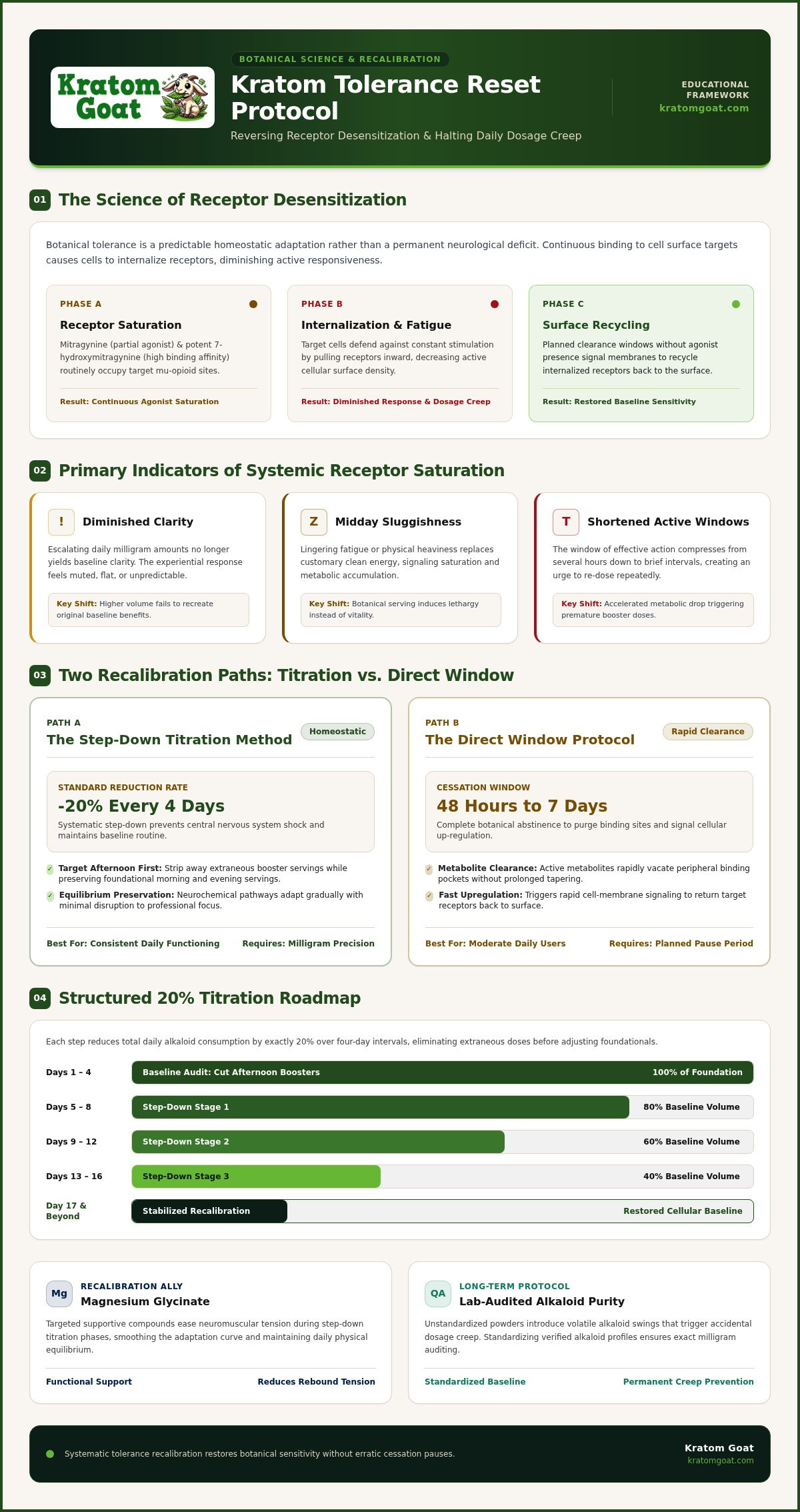
Botanical tolerance isn't a permanent neurological deficit; it's a predictable homeostatic adaptation. When active compounds continuously bind to cell surfaces, target cells defend themselves by pulling receptors inward through a process called internalization. The principal active components found within Mitragyna speciosa, primarily the indole alkaloid mitragynine, function as selective partial agonists at mu-opioid receptors. Unlike full agonists, partial agonists produce a distinct ceiling effect, yet routine saturation still triggers biological desensitization. Relying on an actionable kratom tolerance reset guide allows you to systematically reverse this cellular fatigue, re-establishing receptor density and ensuring dependable botanical performance.
The Pharmacodynamics of Mitragynine and 7-OH Accumulation
Mitragynine preferentially stimulates G-protein coupled signaling pathways while largely avoiding beta-arrestin recruitment, which explains its unique physiological profile. However, secondary alkaloids tell a different story. Highly potent compounds like 7-hydroxymitragynine possess significantly higher binding affinity. While plain raw leaf features trace levels alongside volatile, shifting alkaloid ratios, concentrated extracts flood binding sites rapidly. Without planned pauses, this sustained receptor occupation accelerates downregulation. Receptors require deliberate clearance periods free from high-affinity agonists to recycle back to the cell surface and regain native responsiveness.
Recognizing Primary Indicators of Systemic Receptor Saturation
Detecting saturation early prevents uncontrolled serving escalation. A structured kratom tolerance reset guide highlights specific markers that signal the immediate need for a structured protocol:
- Diminished experiential clarity: Escalating daily milligram amounts no longer yields baseline clarity, delivering muted results instead.
- Midday sluggishness: Lingering fatigue or physical heaviness replaces your customary clean energy and vitality.
- Shortened active windows: The duration of effects shrinks from several hours to brief intervals, triggering the urge to re-dose repeatedly.
Unstandardized powders make tracking these shifts difficult. Utilizing lab-verified alkaloid profiles eliminates this volatility, making your baseline measurable and your reset deliberate.
Tapering Versus Complete Cessation: Choosing Your Recalibration Path
Selecting the right path forward hinges on your current daily intake and professional schedule. Clinical treatment sites frequently pathologize routine receptor desensitization, insisting that abrupt inpatient detox is the only viable answer. In reality, harm-reduction frameworks prove that deliberate titration works exceptionally well for self-directed routines. According to insights highlighted in the DEA Kratom Fact Sheet, higher physiological intake shifts systemic response, underscoring why an informed recalibration strategy is critical. Whether you opt for a gradual step-down taper or an immediate abstention window, this kratom tolerance reset guide delivers an actionable roadmap designed to protect your daily functioning.
The Step-Down Method: Maintaining Homeostasis Through Measured Titration
Gradual titration protects cellular equilibrium while clearing saturated tissues. Instead of jarring the central nervous system, this protocol lowers total daily alkaloid consumption by twenty percent every four days. Begin by stripping away extraneous afternoon booster servings, preserving your foundational morning and evening doses. This gradual reduction prevents sharp dips in focus and physical ease, giving neurochemical pathways adequate space to adapt. If unmeasured raw powders make precise titration difficult, switching to standardized formats from Kratom Goat ensures you can audit milligrams accurately rather than relying on rough estimates.
The Direct Window Protocol: Rapid Receptor Clearing Timelines
Complete cessation prioritizes rapid clearance over extended scheduling. By initiating total botanical abstinence for forty-eight hours to seven consecutive days, active metabolites rapidly vacate peripheral binding sites. This swift elimination signals cell membranes to accelerate target receptor up-regulation. Intermediate consumers with moderate baseline habits benefit most from this direct window, returning to baseline sensitivity within a fraction of the time required by prolonged titration.
For individuals balancing active careers with moderate consumption, hybrid models offer another practical route:
- The Weekend Fast: Cease intake entirely from Friday evening through Sunday evening to achieve sixty hours of direct clearing.
- Midweek Micro-Tapers: Reduce intake by ten percent during high-demand workdays before entering short weekend abstention phases.
- Alkaloid Substitution: Shift away from high-potency extracts toward calibrated baseline servings before starting full pauses.
Matching your protocol to your lifestyle ensures consistent follow-through and eliminates unnecessary physical disruption.
The Step-by-Step Kratom Tolerance Reset Protocol
Executing an effective reset demands empirical tracking rather than subjective intuition. Many clinical recovery portals suggest that self-directed alkaloid modulation is impossible without pharmaceutical replacement. That claim overlooks the power of structured, metric-driven tapering. When you track active compounds with mathematical precision, down-regulated receptors steadily regain responsiveness without interrupting your daily commitments. By approaching this kratom tolerance reset guide as an intentional, phased framework, you regain total agency over your wellness routine.
Phase 1: Establishing Metric Baseline and Eliminating Concentrates
Quantifying your real intake forms the foundation of any successful protocol. For three consecutive days, weigh every botanical serving using an accurate digital milligram scale, logging the exact time and volume. Immediately remove high-potency extracts, stepping down to standard, lab-verified raw leaf products. Because raw leaf still carries shifting alkaloid balances, studying kratom tablets vs capsules helps clarify which standardized formats provide the fixed milligram certainty necessary to execute this initial reduction safely.
Phase 2: Executing the Linear Titration Schedule
Controlled reduction prevents the autonomic nervous system from registering sudden depletion. During this stage, lower your daily cumulative alkaloid consumption by ten to fifteen percent every three to four days. Push the interval between servings outward by sixty to ninety minutes each morning. When the habitual time for a midday dose arrives, swap it for proactive physical habits:
- Targeted hydration: Consume 500 milliliters of cold water paired with trace sea minerals to counter dehydration.
- Cardiovascular stimulus: Complete twenty minutes of brisk walking or moderate cycling to trigger endogenous endorphin release.
- Adaptogenic support: Introduce full-spectrum ashwagandha or rhodiola rosea to blunt stress pathways during schedule transitions.
Phase 3: The Active Fast and Receptor Re-Sensitization
Once your daily baseline drops below twenty percent of your initial starting volume, begin the seventy-two-hour clearance window. This absolute pause allows peripheral tissues to eliminate residual metabolites completely. Prioritize sleep hygiene by adhering to dark, cool sleep environments and optimizing electrolyte balance throughout the day. By the third consecutive day of the clearance window, natural energy reserves rebound noticeably, signaling that surface receptors have cleared and native biological sensitivity is restored.
Receptor Recalibration Allies: Managing Discomfort and Rebound Effects
Receptor clearing doesn't require white-knuckling through physical irritability or restless evenings. While traditional clinical narratives claim that stepping down from botanical routines triggers uncontrollable autonomic distress, targeted nutritional compounds say otherwise. By using specific dietary allies that modulate excitatory pathways and ease muscular tension, you cushion the transition cleanly. A well-constructed kratom tolerance reset guide incorporates targeted biochemical support to restore internal balance without the need for synthetic pharmaceutical interventions.
Nutritional Cofactors and NMDA Receptor Modulation
Modulating glutamate transmission is the primary objective during down-titration. As alkaloid concentration drops, excitable central nervous system signals can produce subtle muscle twitching or restless sensations. The following evidence-backed compounds directly attenuate these rebound responses:
- Magnesium Glycinate: Highly bioavailable chelated magnesium crosses the blood-brain barrier efficiently, blocking excess calcium influx at NMDA receptors to dissolve muscular tightness and smooth out physical irritability.
- Agmatine Sulfate: Functioning as a mild NMDA receptor antagonist, agmatine blunts perceived tolerance, supports healthy neurotransmitter signaling, and accelerates receptor resensitization.
- Black Seed Oil (Nigella Sativa): Packed with thymoquinone, cold-pressed black seed oil encourages a balanced inflammatory response and provides cellular antioxidant protection across peripheral tissues.
- L-Theanine: Sourced from green tea leaves, this amino acid promotes alpha brainwave synchronization, curbing evening restlessness without inducing morning lethargy.
Lifestyle Interventions to Accelerate Alkaloid Clearance
Dietary supplementation works best when combined with structured metabolic flush protocols. Sweating accelerates hepatic and renal metabolite elimination; twenty-minute infrared sauna sessions combined with heavy water intake speed this clearance noticeably. Meanwhile, progressive resistance training triggers natural endorphin production, immediately blunting low mood during daytime pauses. Pair these efforts with rigorous sleep hygiene by eliminating blue-light exposure sixty minutes before bed, helping re-establish stable circadian melatonin synthesis.
Executing an intentional protocol protects your long-term relationship with plant botanicals. When you finish your clearance window and prepare to restore baseline benefits, rely on lab-verified purity and explore standardized third-party tested tablets at Kratom Goat to prevent unmeasured raw powders from compromising your newly recalibrated tolerance.
Post-Reset Protocols: Sustaining Baseline Sensitivity and Preventing Creep
Completing a fast is only half the battle. Reintroducing botanicals without strict parameters triggers rapid receptor saturation, erasing your progress within days. Mainstream clinical recovery narratives claim that any return to botanical use leads directly back to escalating habits. That assumption fails to account for structured, metric-driven discipline. By treating reintroduction as a calculated process, you retain pristine sensitivity while keeping total consumption minimal. Applying the long-term rules in this kratom tolerance reset guide ensures your baseline stays low, stable, and effective permanently.
Begin your post-reset phase at exactly twenty-five percent of your pre-taper serving size. Because your cell receptors have cleared, this fraction of your past volume will produce clean, distinct effects. If you previously took four grams, resume with a single gram. If you rely on concentrated formats such as OPMS gold capsules, reserve them strictly for isolated, high-demand occasions rather than everyday routines. Never bump your serving size upward on consecutive days.
The Crucial Role of Third-Party Verified Purity
Unstandardized botanicals represent the single greatest cause of accidental tolerance creep. When bulk powders vary wildly in alkaloid density or contain unlisted potentiators, your receptors face erratic pharmacological spikes that disrupt native equilibrium. Protect your baseline by reading the kratom certificate of analysis before consuming any product. A transparent laboratory audit verifies the exact percentages of mitragynine and secondary alkaloids. This analytical certainty lets you track actual intake down to the milligram, eliminating the hidden surges that drive tolerance.
Establishing Long-Term Rotational and Frequency Boundaries
Preventing physical adaptation requires firm operational boundaries. Saturated receptors need regular clearance windows, not occasional emergencies. Implement structural controls into your ongoing lifestyle:
- Structured scheduling: Adhere to a strict four-day-on, three-day-off weekly framework to prevent silent tissue accumulation.
- Alkaloid rotation: Alternate between distinct botanical profiles across active days so specific cellular pathways don't adapt to identical alkaloid ratios.
- Rigid dosage caps: Establish an unbreakable daily ceiling and schedule an immediate forty-eight-hour micro-reset whenever you feel the urge to exceed it.
Maintaining long-term baseline sensitivity is straightforward when you choose clean products. By sourcing lab-audited items from Kratom Goat, you secure standardized, premium botanicals that support consistent results, deliberate habits, and enduring efficacy.
Master Your Long-Term Botanical Baseline
Restoring receptor sensitivity isn't about enduring prolonged discomfort; it's about executing a deliberate protocol. By systematically quantifying your daily volume, implementing measured titrations, and utilizing restorative cofactors like magnesium glycinate, you bring saturated receptors back to peak responsiveness. Applying the structured rules of this kratom tolerance reset guide ensures that erratic dosage creep becomes a thing of the past, protecting both your physical clarity and long-term wellness.
Sustaining these hard-won results requires uncompromising botanical standards. Unverified powders with unstable alkaloid levels will compromise your baseline, while clean, audited formulations preserve it. Every product in our curated catalog undergoes strict multi-panel third-party testing backed by comprehensive Certificates of Analysis, guaranteeing zero synthetic fillers or unlisted alkaloid spikes. Backed by over 2,000 verified customer reviews confirming exceptional purity and reliability, we provide the dependable foundation your routine deserves. Take full command of your regimen and explore pure, lab-tested botanicals at Kratom Goat today.
Frequently Asked Questions
How long does a full kratom tolerance reset take to restore baseline sensitivity?
A full tolerance reset typically requires between three and seven consecutive days of complete clearance. For moderate consumers, a 72-hour window clears the majority of active metabolites and triggers receptor recycling. For individuals with extensive, heavy daily routines, an initial linear titration over two to three weeks followed by a four-day abstention window provides complete recalibration. Adhering to a structured schedule ensures receptors regain baseline responsiveness without unnecessary delays.
Can you reset kratom tolerance without experiencing uncomfortable rebound symptoms?
Yes, you can reset your tolerance smoothly by using a measured step-down taper rather than stopping abruptly. Following a structured kratom tolerance reset guide allows cellular pathways to adapt gradually as you reduce daily volume by ten to fifteen percent every few days. Combining this steady titration with targeted nutritional cofactors like magnesium glycinate and proper hydration cushions the nervous system, eliminating acute restlessness, sleep disruption, and rebound fatigue entirely.
What supplements help lower kratom tolerance and support receptor recalibration?
Magnesium glycinate, agmatine sulfate, black seed oil, and L-theanine provide the most effective physiological support during a tolerance reset. Agmatine sulfate acts as an NMDA receptor modulator, dampening neurochemical desensitization and curbing cravings. Bioavailable magnesium relaxes contracted muscle tissues and soothes excitable glutamate pathways. Meanwhile, cold-pressed black seed oil offers strong antioxidant defense, and L-theanine stabilizes neurotransmitter production to ensure calm evenings during reduction phases.
Why do kratom extracts cause tolerance to increase faster than plain raw leaf?
Kratom extracts deliver highly concentrated alkaloid payloads, primarily 7-hydroxymitragynine and refined mitragynine, which bind with significantly higher affinity than raw botanical powder. This sudden concentration rapidly floods target receptors, accelerating cellular internalization and desensitization. Plain raw leaf distributes lesser alkaloid concentrations across fibrous plant material, whereas extracts trigger immediate, intensive receptor saturation that drives rapid tolerance when taken on consecutive days without mandatory clearance intervals.
How frequently should regular kratom consumers implement a structured tolerance break?
Regular botanical consumers should incorporate a structured tolerance break every four to six weeks to preserve long-term sensitivity. Alternatively, establishing a weekly rhythm of four active days followed by three consecutive clearance days prevents active metabolites from building up in the first place. Practicing this routine discipline prevents the quiet onset of receptor saturation, ensuring your daily servings remain consistently low, predictable, and fully effective over time.
What is the difference between a direct cessation break and a step-down taper?
A direct cessation break involves stopping all botanical intake immediately for several days to achieve rapid receptor recycling. A step-down taper gradually lowers daily alkaloid milligram intake over one to three weeks before introducing a brief pause. Direct cessation works best for moderate users seeking quick results, while structured tapering prevents physiological disruption for individuals managing demanding daily work schedules.
Can rotating kratom strains prevent tolerance from building up over time?
Rotating botanical profiles delays receptor fatigue but cannot completely prevent tolerance on its own. Switching between red, green, and white leaf variations alters the secondary alkaloid ratios your receptors encounter, slowing homogenous adaptation. However, because all strains share primary alkaloids like mitragynine, receptor saturation still occurs without scheduled rest days. Following our comprehensive kratom tolerance reset guide alongside a rotation schedule ensures lasting receptor responsiveness.